
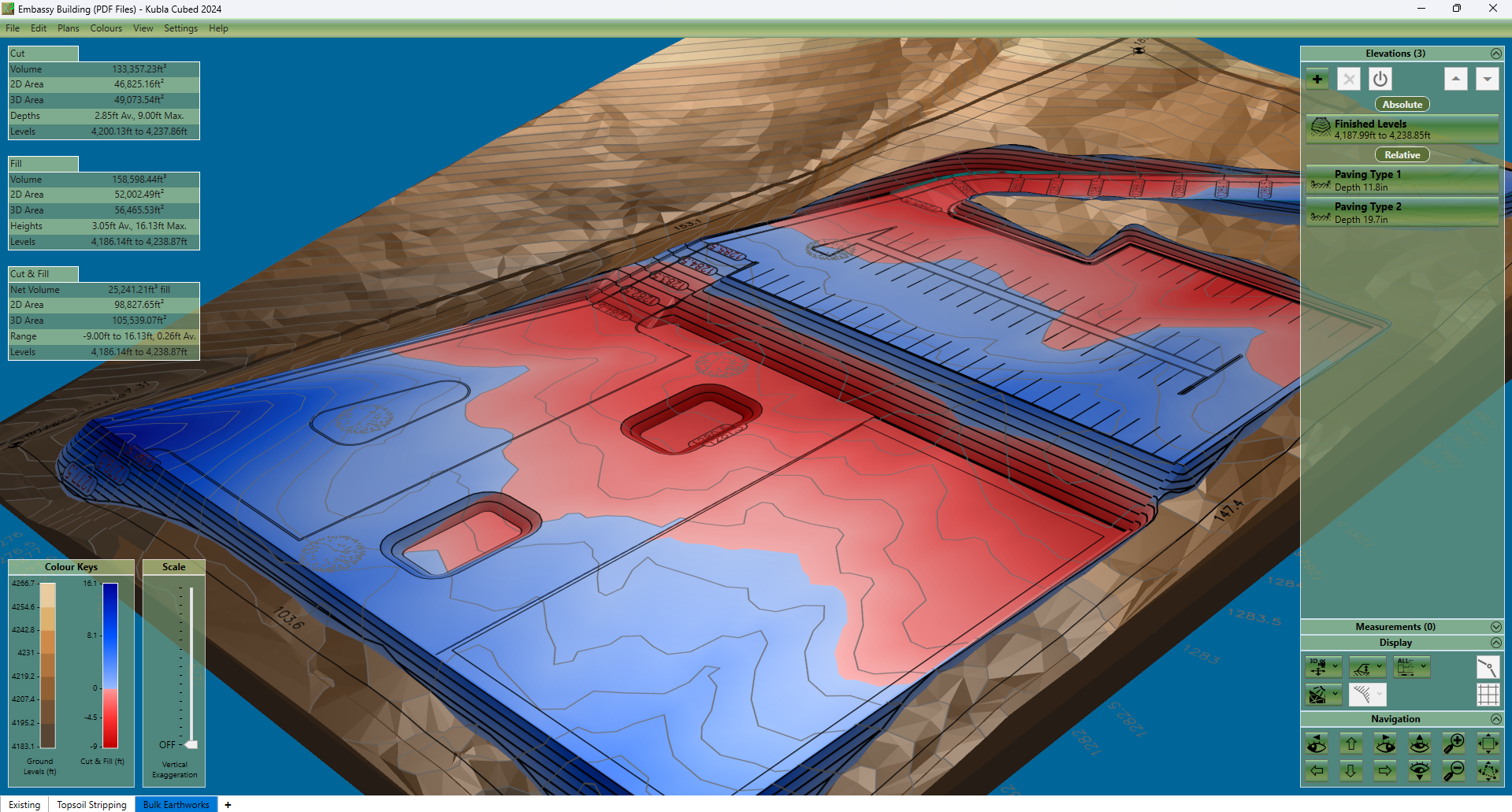
Cut-and-fill calculation is an important process for building and developing properties. It calculates how much earth will need to be removed (cut) and how much will need to be added (fill) to create the desired grade for the site. Accurate calculation of cut and fill will lead to cost-effective solutions in construction projects; in addition, it assures that your project is structurally sound and meets all environmental regulations. With the need for accurate calculation of earthworks appearing in many industries, including highway and street construction, golf course design, and site planning for commercial buildings, accurate cut-and-fill calculation will help minimize waste and maximize material use while also keeping your project on schedule.
What Is Earthwork Volume Calculation and Why It Matters
Earthwork volume calculation involves measuring the amount of material removed or added during site grading. It helps engineers and planners estimate costs, balance soil movement, and minimize hauling requirements. Accurate calculations prevent over-excavation and reduce environmental impact.
Key Components of Earthwork Volume Calculation
Earthwork volume calculation relies on existing ground levels, proposed design elevations, grid spacing, and contour data. These elements allow professionals to measure volume differences accurately, ensuring cut and fill estimation aligns with site conditions and project requirements.
Importance of Accurate Cut and Fill Estimation in Projects
Accurate cut and fill estimation is essential for controlling construction costs and avoiding delays. Incorrect estimates can lead to excessive material transport, increased labor expenses, and structural issues. Precision ensures smoother execution and better financial planning.
How Cut and Fill Estimation Impacts Project Budget
Proper cut and fill estimation directly influences excavation costs, material procurement, and hauling expenses. Balanced calculations reduce the need for importing or exporting soil, helping contractors stay within budget while maintaining site stability.
Common Methods Used for Cut and Fill Calculation
Several techniques are used for cut and fill calculation, depending on project complexity and available data. Each method offers varying levels of accuracy and is chosen based on site size, terrain complexity, and design precision.
- Grid method for flat or moderately sloped sites
- Contour method for uneven terrain
- Digital terrain modeling using CAD software
- Cross-section method for roads and linear projects
Manual vs Digital Cut and Fill Calculation Methods
Manual methods rely on hand calculations and drawings, while digital methods use software for precise earthwork volume calculation. Digital tools reduce errors, save time, and provide visual clarity, making them ideal for large-scale or complex projects.
Role of Technology in Modern Cut and Fill Calculation
Modern cut and fill calculation heavily depends on technology such as CAD, GIS, and 3D modeling. These tools improve accuracy, enable real-time adjustments, and support detailed analysis of earthwork volume calculation.
| Tool Used | Purpose | Accuracy Level |
| AutoCAD Civil 3D | Terrain modeling & grading | High |
| GIS Software | Topographic analysis | Medium to High |
| Spreadsheet Tools | Basic cut and fill estimation | Medium |
Benefits of Using Software for Cut and Fill Estimation
Software-based cut and fill estimation reduces human error and improves efficiency. It allows engineers to simulate grading scenarios, compare alternatives, and optimize earthwork plans before construction begins.
Factors Affecting Cut and Fill Calculation Accuracy
Several factors influence the accuracy of cut and fill calculations, including survey quality, terrain complexity, and design changes. Ignoring these factors can lead to costly mistakes and rework.
Survey Data and Its Role in Cut and Fill Calculation
High-quality survey data is the foundation of accurate cut and fill calculation. Precise elevation points and contour mapping ensure reliable earthwork volume calculation, reducing discrepancies between design and execution.
Best Practices for Accurate Cut and Fill Estimation
Following best practices ensures consistency and reliability in cut and fill estimation. Proper planning, data validation, and regular reviews help maintain accuracy throughout the project lifecycle.
- Use updated and verified survey data
- Cross-check manual and digital calculations
- Consider soil compaction and shrinkage
- Review calculations after design changes
Why Reviewing Cut and Fill Calculations Is Essential
Regular review of cut and fill calculations helps identify discrepancies early. This proactive approach prevents costly corrections during construction and ensures earthwork volume calculation remains aligned with site conditions.
Frequently Asked Questions

Founder & CEO
Bigyan Kar is the driving force behind Geoshot Technologies and has been since its founding, leading the company’s vision in delivering advanced CAD, GIS, graphics, map illustrations, and 3D solutions across multiple industries. While Geoshot serves a wide range of sectors, Bigyan has maintained a strong specialization in golf course graphics.
