
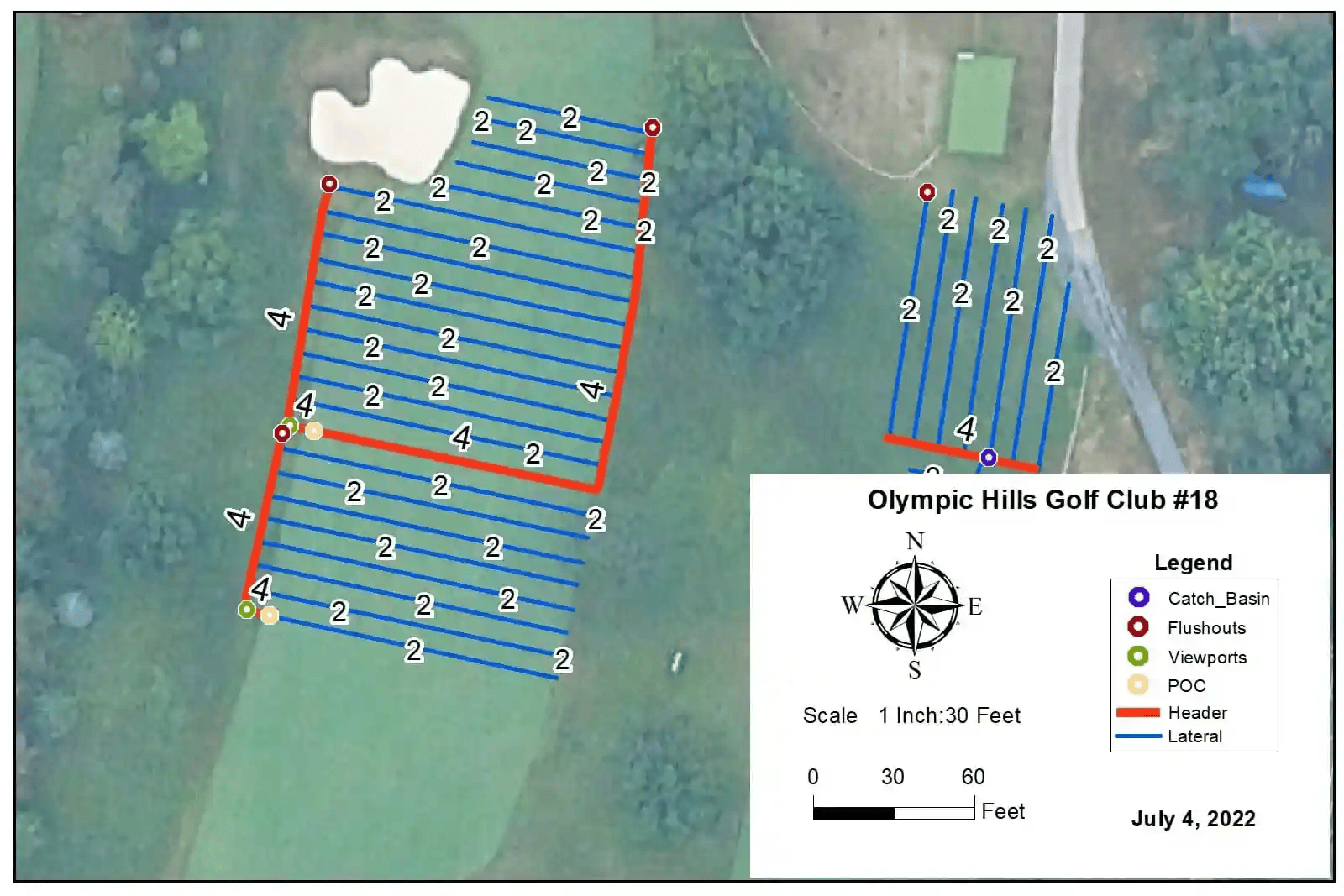
An electric irrigation system has been established as an integral component for preserving the quality and long-term viability of all levels of turf on any golf course through its ability to maintain healthy turf, promote proper play, and preserve the ecological balance of a golf course. As water costs increase and more attention is paid to water conservation through environmental legislation, the need for creating an efficient irrigation system has become more important than ever before. An adequately planned irrigation system incorporates principles of golf course design with the use of detailed development strategies designed to provide equal distribution of water while minimizing water losses, creating a healthy environment on golf courses. The use of smart technology, hydraulic performance, and data analysis can help make modern irrigation systems efficient in maximizing performance throughout the entire golf course.
Importance of Golf Course Planning in Irrigation Design
Effective golf course planning ensures irrigation systems align with terrain, turf types, and play areas. Early integration of irrigation system layout during planning reduces redesign costs, improves coverage accuracy, and ensures water efficiency while preserving the course’s strategic and aesthetic intent.
Terrain Analysis and Water Distribution
Understanding slopes, elevation changes, and drainage patterns helps designers position sprinklers correctly. Proper terrain analysis prevents runoff and pooling while ensuring water reaches all turf zones evenly, especially on sloped fairways and elevated greens.
Turf Zoning for Precise Irrigation
Different turf areas have varying water needs. Greens, tees, fairways, and roughs should be zoned separately to allow accurate scheduling, ensuring optimal turf health without overwatering less critical areas.
Integration with Course Architecture
Irrigation systems must complement bunkers, hazards, and cart paths. Coordinating irrigation system layout with golf course planning preserves design integrity while preventing unnecessary water spray onto non-turf areas.
Future Expansion Considerations
A scalable irrigation design allows for future course modifications, added holes, or turf changes. Planning for expansion ensures system longevity and avoids costly upgrades as the course evolves.
Key Components of Efficient Golf Course Irrigation Systems
Efficient golf course irrigation systems rely on high-quality components working together seamlessly. From pumps to control software, each element contributes to consistent water delivery, reduced losses, and long-term operational efficiency.
- High-efficiency pump stations for consistent pressure
- Automated sprinkler heads with adjustable arcs
- Central control systems with real-time monitoring
Pump Stations and Water Sources
Pump stations regulate water flow and pressure across the course. Selecting energy-efficient pumps and reliable water sources ensures stable system performance while reducing electricity costs and minimizing downtime.
Sprinkler Head Selection and Placement
Modern sprinkler heads offer variable radius and flow control. Proper spacing and placement improve coverage uniformity, reduce overspray, and support targeted irrigation across complex course layouts.
Central Control and Automation
Centralized control systems allow superintendents to manage watering schedules remotely. Automation improves accuracy, adapts to weather conditions, and supports data-driven decision-making for water conservation.
Sensors and Weather Integration
Soil moisture sensors and weather stations help irrigation systems respond dynamically. These tools prevent unnecessary watering during rainfall and adjust schedules based on evaporation and temperature data.
Optimizing Irrigation System Layout for Water Efficiency
A strategic irrigation system layout ensures water is delivered precisely where needed. Optimized layouts reduce overlap, minimize evaporation losses, and support sustainable water use across the entire golf course.
| Layout Factor | Design Focus | Efficiency Benefit |
| Sprinkler Spacing | Head-to-head coverage | Uniform watering |
| Pipe Network | Loop and grid systems | Pressure stability |
| Zone Design | Area-specific control | Reduced water waste |
Head-to-Head Coverage Strategy
Head-to-head coverage ensures each sprinkler reaches the next, creating even distribution. This approach eliminates dry spots and reduces overwatering, particularly on greens and high-traffic fairways.
Pipe Network Configuration
Looped and grid-based pipe systems maintain consistent pressure across zones. Proper pipe sizing and routing reduce friction losses and ensure reliable performance during peak irrigation cycles.
Pressure Regulation Techniques
Pressure-regulating valves prevent misting and runoff. Maintaining optimal pressure improves sprinkler efficiency and protects system components from premature wear.
Minimizing Evaporation Losses
Combined with efficient layout design, this practice maximizes water absorption and improves overall system performance.
Sustainable Practices in Modern Golf Course Irrigation Systems
Sustainability is a core goal of modern golf course irrigation systems. Environmentally responsible design reduces water consumption, lowers operational costs, and aligns courses with regulatory and community expectations.
- Use of reclaimed or recycled water
- Smart scheduling based on evapotranspiration
- Energy-efficient pumping solutions
Reclaimed Water Utilization
Many courses now use treated wastewater for irrigation. This approach conserves freshwater resources while providing a reliable supply for maintaining turf quality.
Data-Driven Water Management
Advanced software analyzes weather and soil data to fine-tune irrigation schedules. Data-driven management ensures water is applied only when necessary, improving efficiency and sustainability.
Compliance with Environmental Regulations
Efficient irrigation systems help courses meet local water-use regulations. Proper design demonstrates environmental stewardship and reduces the risk of penalties or operational restrictions.
Long-Term Cost Savings
Although initial investment may be higher, efficient irrigation systems reduce long-term costs through lower water bills, reduced maintenance, and extended system lifespan.
Common Challenges and Solutions in Irrigation Design
Designing irrigation systems for golf courses involves balancing performance, budget, and environmental factors. Understanding common challenges helps designers implement practical, long-lasting solutions.
Uneven Water Coverage
Uneven coverage often results from poor sprinkler placement or pressure issues. Careful layout planning and regular audits help maintain uniform watering across all play areas.
High Maintenance Requirements
Complex systems can increase maintenance workload. Selecting durable components and designing accessible layouts simplifies repairs and reduces downtime.
Adapting to Climate Variability
Changing weather patterns require flexible irrigation strategies. Smart controllers and modular designs allow quick adjustments to fluctuating rainfall and temperature conditions.
Budget Constraints
Balancing upfront costs with long-term efficiency is crucial. Phased implementation and prioritizing critical zones help manage budgets without compromising performance.
Frequently Asked Questions

Founder & CEO
Bigyan Kar is the driving force behind Geoshot Technologies and has been since its founding, leading the company’s vision in delivering advanced CAD, GIS, graphics, map illustrations, and 3D solutions across multiple industries. While Geoshot serves a wide range of sectors, Bigyan has maintained a strong specialization in golf course graphics.
