
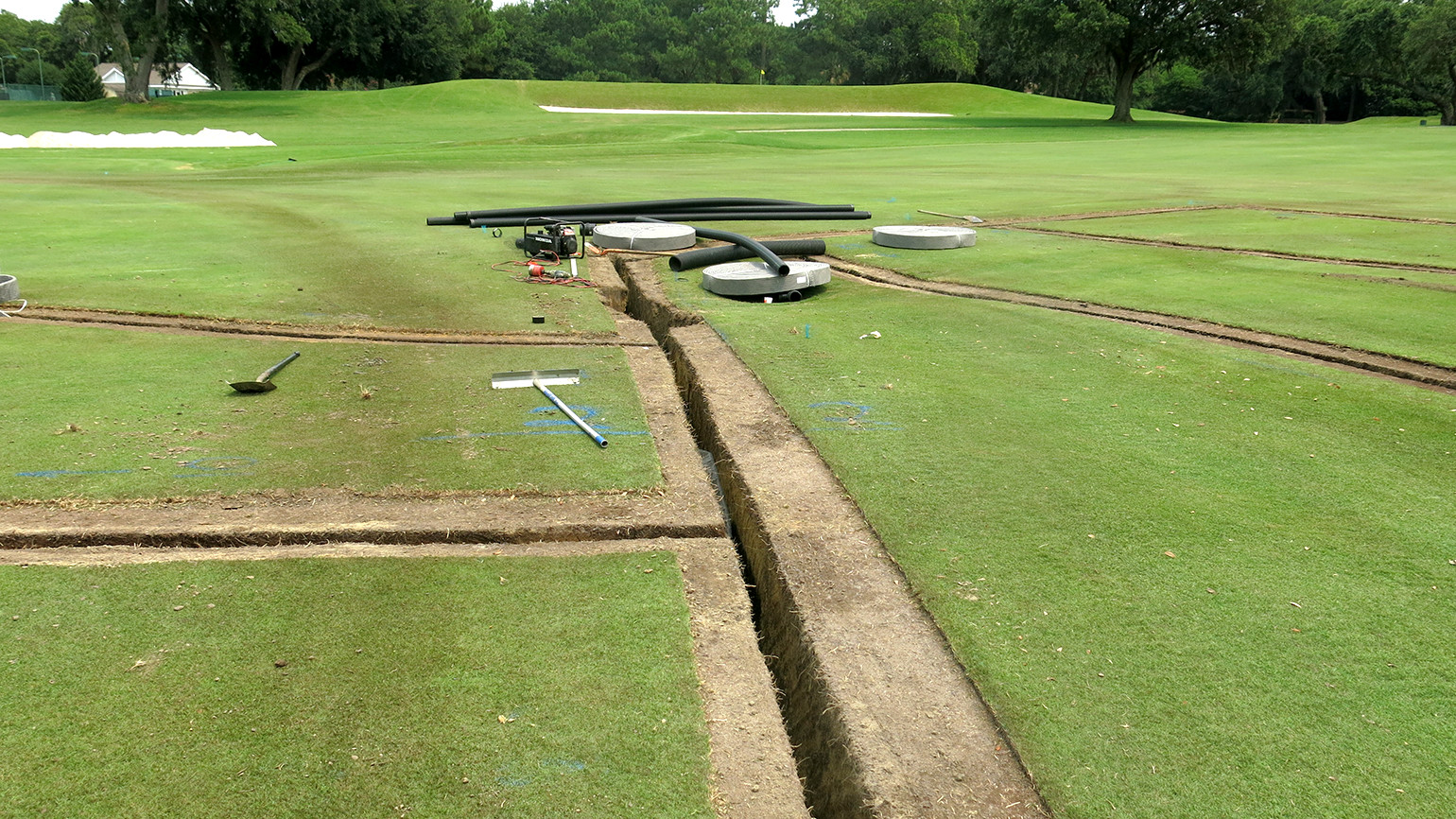
Drainage is essential for the success of golf courses because it drains away excess moisture, protects the health of the turf, and maintains consistency in terms of the playing surface. A well-functioning drainage system will help prevent waterlogging, turf loss, and unsafe playing conditions on a golf course. A good drainage system enhances the life span of a golf course, enhances its visual appeal, and improves the ability of grounds personnel to manage maintenance throughout the growing season and into all four seasons. Golf drainage systems provide a long-term, reliable method of enhancing and protecting the quality and longevity of golf courses.
Why Golf Course Drainage Design Impacts Playability and Turf Health
A well-planned golf course drainage design directly influences turf quality and player experience. Proper water movement prevents surface saturation, ensures firm fairways, and maintains consistent green speeds even after heavy rainfall.
Preventing Waterlogged Fairways and Greens
Standing water suffocates grass roots and weakens turf structure. An effective golf course drainage system quickly removes excess moisture, preventing muddy conditions and ensuring fairways and greens remain firm, playable, and visually appealing throughout the year.
Enhancing Consistency in Ball Roll and Bounce
Uneven moisture levels affect ball behaviour during play. Proper golf drainage helps maintain uniform surface conditions, allowing predictable ball roll on greens and consistent bounce on fairways, which is critical for professional-level competition.
Improving Safety for Players and Maintenance Staff
Poor drainage increases slip hazards and unstable ground conditions. A reliable golf course drainage design minimises puddles and soft spots, creating safer playing surfaces and reducing risks during routine maintenance operations.
Supporting Year-Round Course Availability
Courses with efficient drainage recover faster after rain events. This allows clubs to reopen sooner, reduce downtime, and maintain consistent revenue while providing uninterrupted access for members and tournament organisers.
Key Components of an Effective Golf Course Drainage System
An efficient golf course drainage system integrates surface and subsurface solutions to manage water flow. Each component works together to protect turf, stabilize soil, and maintain optimal playing conditions.
- Surface grading and contouring for natural water flow
- Subsurface pipe and slit drainage systems
- Sand-based root zones for greens and tees
- Catch basins and outfalls for controlled discharge
Surface Drainage and Strategic Grading
Surface drainage relies on precise grading to guide water away from play areas. Proper slopes and contours prevent pooling while maintaining the strategic design and visual integrity of fairways, bunkers, and greens.
Subsurface Drainage for Long-Term Stability
Subsurface systems remove water from below the turf surface, protecting root zones from saturation. These systems are essential for maintaining turf density and preventing soil compaction in high-traffic areas.
Drainage Solutions for Greens and Tees
Greens and tees require specialised drainage due to their intensive use. Sand-based profiles combined with internal drainage layers ensure fast water movement while preserving smooth, consistent playing surfaces.
Integration with Natural Waterways
Modern golf course drainage design often integrates with existing streams or retention areas. This approach supports sustainable water management while preventing erosion and protecting surrounding landscapes.
How Poor Drainage Affects Championship-Level Golf Courses
Inadequate golf drainage can undermine course reputation and performance. Persistent moisture issues damage turf, disrupt play schedules, and increase long-term maintenance costs.
- Turf disease and root rot
- Increased maintenance and repair expenses
- Reduced tournament readiness
- Player dissatisfaction and safety concerns
Increased Turf Stress and Disease
Excess moisture creates ideal conditions for fungal diseases and weak root systems. Without proper drainage, turf struggles to recover, leading to thin grass coverage and inconsistent playing quality.
Higher Maintenance Costs Over Time
Courses with poor drainage require frequent repairs, re-turfing, and chemical treatments. Investing in a reliable golf course drainage system reduces long-term costs and improves overall maintenance efficiency.
Disruption of Tournament Schedules
Championship events demand predictable conditions. Poor drainage increases the likelihood of delays or cancellations, affecting event planning, broadcast schedules, and the course’s professional reputation.
Negative Player Experience
Soft fairways, muddy bunkers, and slow greens frustrate players. Effective golf drainage ensures premium playing conditions that meet the expectations of both amateur golfers and professionals.
Role of Golf Drainage in Sustainable Course Management
Beyond playability, golf drainage supports environmentally responsible course management. Efficient water control reduces waste, protects ecosystems, and promotes sustainable maintenance practices.
- Reduced water consumption
- Controlled runoff and erosion prevention
- Healthier turf with fewer chemicals
Efficient Water Usage and Conservation
Proper drainage prevents overwatering by allowing precise irrigation control. Courses can maintain optimal moisture levels without excessive water use, supporting sustainability goals and reducing utility costs.
Minimizing Environmental Impact
A well-designed golf course drainage system controls runoff, preventing fertilizers and sediments from entering nearby water bodies. This protects local ecosystems while maintaining course performance.
Supporting Long-Term Course Resilience
Drainage systems help courses adapt to changing weather patterns. By managing heavy rainfall efficiently, golf facilities remain resilient against climate-related challenges and extreme conditions.
Enhancing Course Longevity
Healthy turf and stable soil structures extend the lifespan of course. Effective golf drainage protects investments in greens, fairways, and bunkers over decades.
Evaluating Drainage Performance on Championship Golf Courses
Regular assessment ensures that golf drainage systems continue to perform at championship standards. Monitoring water flow and turf response helps identify areas needing improvement.
| Drainage Element | Purpose | Impact on Play |
| Surface Grading | Guides runoff | Prevents puddles |
| Subsurface Pipes | Removes root-zone water | Improves turf health |
| Sand Root Zones | Enhances percolation | Consistent green speed |
Monitoring After Heavy Rainfall
Observing how quickly water clears after storms provides insight into drainage efficiency. Rapid recovery indicates a well-functioning golf course drainage system suitable for tournament-level play.
Assessing Turf Response and Health
Healthy turf with deep root systems signals effective drainage. Grounds teams can use turf condition as a key indicator of overall system performance.
Updating Older Drainage Systems
Many older courses benefit from modern drainage upgrades. Retrofitting outdated systems improves playability while preserving the original course design and character.
Partnering with Drainage Experts
Professional assessment ensures drainage solutions align with course goals. Expert input helps maintain championship standards while optimising maintenance strategies.
Frequently Asked Questions

Founder & CEO
Bigyan Kar is the driving force behind Geoshot Technologies and has been since its founding, leading the company’s vision in delivering advanced CAD, GIS, graphics, map illustrations, and 3D solutions across multiple industries. While Geoshot serves a wide range of sectors, Bigyan has maintained a strong specialization in golf course graphics.
